Most With Hepatitis C May Soon Find Hope in New Treatments

This is fascinating.  I love the world of medicine!  -- Dr. Dale. -----

Most With Hepatitis C May Soon Find Hope in New Treatments

Two studies suggest pill cocktails may one day replace injections altogether

WebMD News from HealthDay
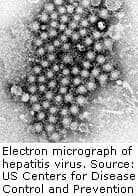
Faldaprevir and deleobuvir are part of effort to

By Mary Brophy Marcus

HealthDay Reporter

WEDNESDAY, Jan. 15, 2014 (HealthDay News) -- Hepatitis C treatment isn't pretty, but the dark days of weekly injections, rough side effects and no guarantee of full recovery from the liver-damaging disease may soon be over, researchers report.

Two studies, both published in the Jan. 16 issue of the New England Journal of Medicine, involved giving various combinations of antiviral pill cocktails to patients with hepatitis C. Some had failed to respond to standard treatments, and some had not received treatment yet. Yet, the cocktails cleared the virus in both studies for between 93 percent and 98 percent of the patients.

These cocktails are game-changers for the illness, said Andrew Muir, director of gastroenterology and hepatology research at the Duke Clinical Research Institute.

"This has made me change the way I'm talking with patients. These regimens are essentially going to cure everybody," said Muir, who has conducted related research but did not participate in these studies. "I had a patient in my office this morning who said, 'If I get cured,' and I said to him, 'When you get cured,'" Muir added.

Continue reading below...

"I think the great thing about these new direct-acting antivirals is that with the right combinations of drugs, all patients appear to be cured," said Muir.

The first study, conducted by Johns Hopkins researchers, included 211 men and women with hepatitis C who took two pill-form antiviral medications, daclatasvir and sofosbuvir. The patients were treated at 18 medical centers in the United States and Puerto Rico. They took 60 milligrams of daclatasvir and 400 milligrams of sofosbuvir for either 12 or 24 weeks, with or without a third drug, ribavirin.

The scientists reported that the experimental drugs were safe and effective in the patients, even those who'd had earlier standard therapy for hepatitis C virus -- interferon shots and two other medications.

"We saw a very high response rate in those who got the two [new] medications. This study paves a path forward for interferon-free regimens. These drugs are potentially highly effective and tolerable," said study author Dr. Mark Sulkowski, medical director of the Johns Hopkins Center for Viral Hepatitis.

Sulkowski said 98 percent of the 126 previously untreated patients and 98 percent of 41 patients whose infections had not cleared despite treatment with standard hepatitis C therapy, were considered cured. "There was no detectable virus in their blood three months after the treatment stopped," he noted.

The U.S. Food and Drug Administration approved sofosbuvir in combination with peginterferon and ribavirin this past December for one form of hepatitis C, and daclatasvir is still in the approval process, Sulkowski said.

According to the U.S. Centers for Disease Control and Prevention, 2.4 million people in the United States have chronic hepatitis C infection. The virus is silent early on, but over two or three decades it can lead to severe liver damage, sometimes requiring a liver transplant.

Faldaprevir and deleobuvir are part of effort to

Up until now, injectable interferon has been the key form of treatment, usually combined with antiviral medications, said Sulkowski, but many patients can't tolerate the side effects of the interferon, which can include flu-like symptoms, nausea, fatigue, anxiety and depression.

The second study, headed up by researchers at Virginia Mason Medical Center in Seattle, involved more than eight medical centers in the United States and internationally. It included 571 patients with hepatitis C, some of whom had not received treatment previously and others who had previously received standard treatments with interferon injections and ribavirin -- an antiviral drug that when given reduces relapses -- but had not responded to them.

The participants were randomly assigned to take any of three combinations of antiviral pills -- medications called ABT-450, ABT-267, and ABT-333 -- for eight, 12 or 24 weeks.

Almost all of the patients (more than 93 percent in both groups) saw the virus cleared from their systems within 24 weeks, said lead author Dr. Kris Kowdley, director of the liver center of excellence in the Digestive Disease Institute at Virginia Mason.

"Even in patients with prior no-response, a difficult-to-treat population with interferon, this all-oral regimen for 12 weeks can achieve a cure in the vast majority of patients. It is safe and well-tolerated," said Kowdley. "It really changes the paradigm for treatments."

Dr. Anna Lok, director of clinical hepatology at the University of Michigan Medical School, and a co-author on the Hopkins study, said, "These two regimens have excellent safety profiles." But she noted, the drugs are expensive, up to thousands of dollars per treatment course.

"Cost is an issue, and will make these treatments not accessible to many patients," said Lok.

Drug makers funded both studies, but Lok noted, "They scrutinize the data carefully and these data will be scrutinized by the FDA also, so I would trust the data presented."

Muir said the next step is to keep pushing for better hepatitis C screening, so that patients can receive treatments before their livers fail. "Anybody we can catch when they have stable liver disease, we can help," he said.

http://www.webmd.com/hepatitis/news/20140115/most-with-hepatitis-c-may-soon-find-hope-in-new-treatments

Low-dose aspirin may reduce colorectal cancer in healthy women.

Happy Tuesday Friends, I found this recent news article online and just had to share.

Alternate-day, low-dose aspirin may reduce colorectal cancer in healthy women

Long-term use of alternate-day, low-dose aspirin may reduce risk for colorectal cancer but increase risk for gastrointestinal bleeding in healthy women, a new study found.

Researchers followed 39,876 women aged 45 years or older in the Women's Health Study (WHS) who took 100 mg of alternate-day aspirin or placebo beginning April 30, 1993, through Jan. 24, 1996 and ending March 31, 2004. There was a median of 10 years of follow-up among 33,682 women through March 2012.

Results appeared in the July 16 Annals of Internal Medicine.

There were 5,071 cancer cases (including 2,070 breast, 451 colorectal, and 431 lung cancer cases) and 1,391 deaths from cancer in the entire group. Colorectal cancer was reduced in the aspirin group (hazard ratio [HR], 0.80; 95% CI, 0.67 to 0.97; P=0.021), primarily proximal colon cancer (HR, 0.73; 95% CI, 0.55 to 0.95;P=0.022). Survival curves suggested that the difference emerged after 10 years, with a post-trial colorectal cancer reduction of 42% (HR, 0.58; 95% CI, 0.42 to 0.80; P<0.001). There was no extended effect on cancer deaths or colorectal polyps. The aspirin group had more gastrointestinal bleeding (HR, 1.14; 95% CI, 1.06 to 1.22; P<0.001) and peptic ulcers (HR, 1.17; 95% CI, 1.09 to 1.27; P<0.001). Aspirin had no effect on all-type cancer rates (HR, 0.97; 95% CI, 0.92 to 1.03;P=0.31), breast cancer (HR, 0.98; 95% CI, 0.90 to 1.07; P=0.65) or lung cancer (HR, 1.04; 95% CI, 0.86 to 1.26; P=0.67).

The researchers noted that delayed differences in cancer outcomes by aspirin assignment may indicate an effect in the early stages of carcinogenesis, requiring a long latent period, especially at low doses, or that increased gastrointestinal bleeding leads to more endoscopy and early polyp removal.

They wrote, "However, rates of colonoscopy or sigmoidoscopy were similar among groups in the WHS, and we found no difference in reported colon polyp occurrence over time. Furthermore, the greatest effect was seen in the proximal colon, which is less affected by sigmoidoscopy. Even if reduced cancer is caused by increased endoscopy and polyp removal due to symptoms, the net clinical effect seems to be a reduction in colorectal cancer."

http://acpinternist.acponline.org/weekly/archives/2013/7/16/index.html#2


-- Dr. Dale


Study Ties Poor Oral Health to Cancer-Causing Virus

A couple weeks ago I blogged about Oral Health and its link to HPV.  Here it is again in the New York Times.  Such a great read.  -- Dr. Dale ----------

http://well.blogs.nytimes.com/2013/08/21/study-ties-poor-oral-hygiene-to-cancer-causing-virus/?ref=health&_r=0

AUGUST 21, 2013, 1:09 PM

Study Ties Poor Oral Health to Cancer-Causing Virus

By CATHERINE SAINT LOUIS

People with swollen gums, missing teeth and other signs of poor dental health are more likely to be infected orally with the human papillomavirus, researchers reported on Wednesday.

HPV, a sexually transmitted virus, causes cancers of the cervix, mouth and throat. The new study, published in Cancer Prevention Research, is the first to document a link between the infection and poor oral health, but other experts noted that the research found only an association and relied mostly on self-reported data about oral health. It is too early to say with confidence that brushing and flossing regularly can prevent oral HPV infection, they said.

The finding is a “modest association,” said Aimée R. Kreimer, an epidemiologist at the National Cancer Institute who was not involved in the study. “We don’t know if poor oral health causes HPV infection and would go on to cancer,” she said.

This finding suggests another potential downside to deficient hygiene “because of a possible association between poor to fair oral health and the presence of the human papillomavirus, which in itself is identified with several diseases,” said Dr. Sol Silverman, a professor of oral medicine at the University of California, San Francisco, and a spokesman for the American Dental Association.

Researchers at the University of Texas Health Science Center at Houston reviewed data on both high-risk and low-risk oral HPV infection and oral health in 3,439 adults, ages 30 to 69, participating in the nationally representative 2009-10 National Health and Nutrition Examination Survey, known as NHANES. The study found that being male, smoking cigarettes, and having multiple oral sex partners increased the likelihood of oral HPV infection, findings similar to those in an earlier analysis of NHANES data.

But after controlling for smoking and the number of oral sex partners, the new study found that self-rated poor oral health was an independent risk for oral HPV infection. The odds of having an oral HPV infection were 55 percent higher among those reporting poor to fair oral health.

Throat cancer caused by HPV is increasing, particularly along middle-aged white men. About 25,000 cases a year are diagnosed in the United States. Many experts believe oral infection with the virus has increased along with the frequency of oral sex.

“What we think might be happening is if you have poor oral health — ulcers, gum inflammation, sores or lesions, any openings in the mouth — that might provide entry for HPV,” said Christine Markham, the second author on the paper and an associate professor of health promotion and behavioral sciences at the University of Texas Health Science Center at Houston. “We don’t have sufficiently strong evidence to demonstrate that conclusively in the study, but that’s our thinking.”

Yet the increase in risk is modest, said Dr. Kreimer, “less than the two- to threefold elevations in risk that cause concern.” And three of the four measures used to assess the participants’ oral health, including the presence of gum disease, were self-reported, a limitation of the study. One measure — number of teeth lost — was reported by dental hygienists.

“It’s the first paper linking self-reported measures of poor oral hygiene and an oral HPV infection,” Dr. Maura L. Gillison, a professor of medicine at Ohio State University, who was not involved in the study. “It’s a strong paper because it’s a first, but does it have public health significance? Should people change their behavior? I would say no.”

Oral cancers caused by HPV are typically found near the tonsils or at the base of the tongue, she added, and it’s hard to see how those regions could be directly affected by periodontal inflammation.

Experts including Dr. Gillison nonetheless called the study an important first step. “Further study — even though it would be expensive and time-consuming — should be considered,” said Dr. Silverman.